Robotics
One Relay With Module
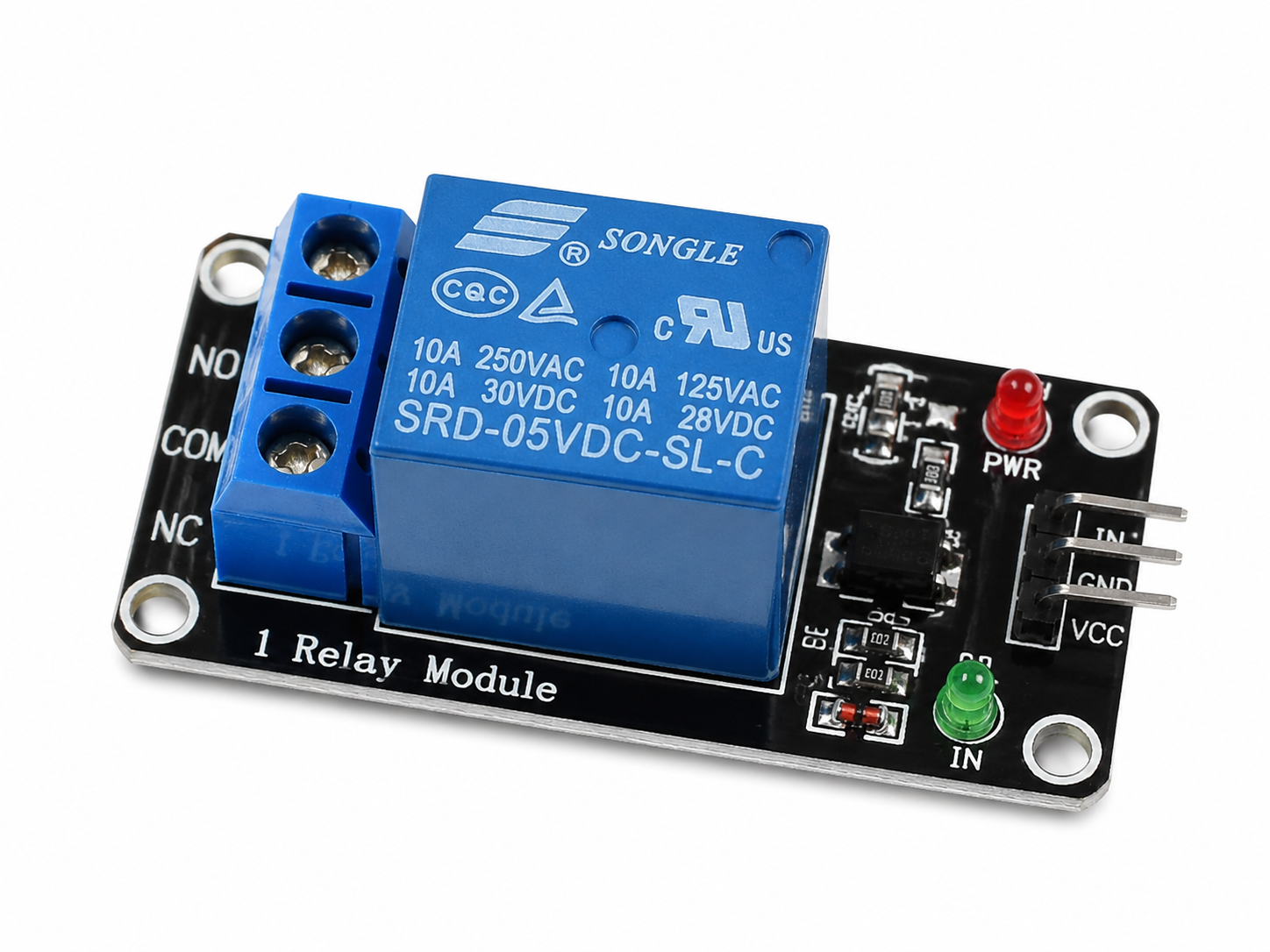
The One Relay Module is a compact electronic switching module used to control high-voltage or high-current devices with a low-voltage microcontroller such as Arduino, ESP32, or other development boards. It typically features a single-channel relay with an easy-to-use interface and indicator LED.
Features:
Single-channel relay module
Can be controlled by Arduino, ESP32, and other microcontrollers
Provides electrical isolation between control and load circuits
Suitable for switching lights, motors, fans, pumps, and other devices
Easy screw-terminal connections
LED indicator for relay status
Using this componentPlan its role before adding it to a circuit.
Consider where this component fits in your project: what it connects to, what signal or movement it provides, and what supporting hardware it needs. Use the listing description as a starting point, then confirm exact electrical and mechanical specifications against the manufacturer information before powering a circuit.
Build safely and check compatibility
Review voltage, current, polarity, pin layout, connector type and physical dimensions for the complete setup. Disconnect power while changing wiring, and test new connections carefully. Browse related robotics and electronics parts or ask us about the intended application through the contact page.
 Best seller