Robotics, electronics & practical learningInsta Office 2nd Floor, Kumar Plaza, Begum Bridge, opposite GIC College, CMS Mission Compound, Thapar Nagar, Meerut, Uttar Pradesh 250001 · Shipping across IndiaNeed help choosing? Contact us ↗
</>Code Domain Technologies.
AccountCart 0
Sensors

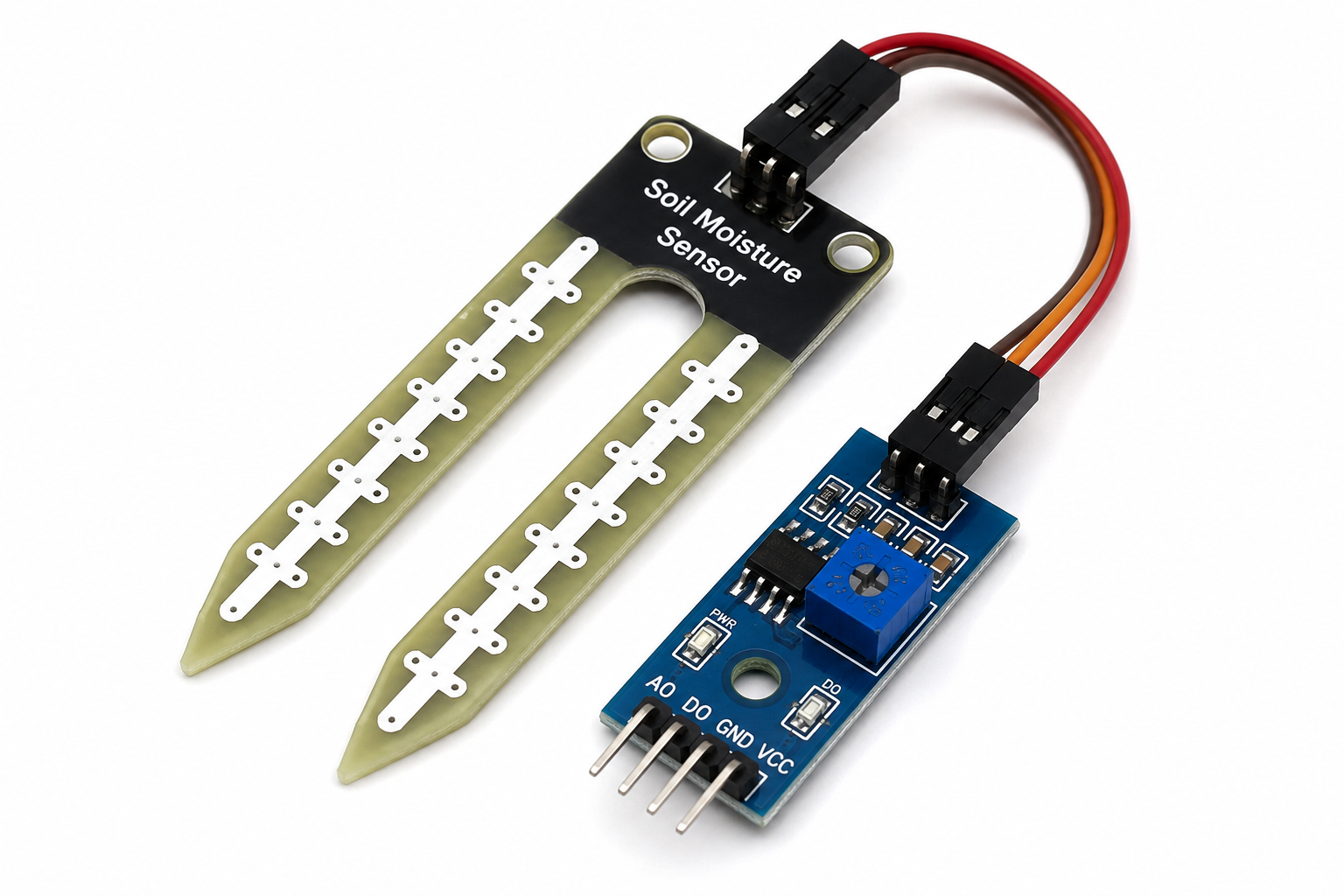
Soil Moisture Sensor With Module

A Soil Moisture Sensor is an electronic sensor used to detect the moisture level present in soil. It is commonly used in automatic irrigation systems, smart gardening, agricultural projects, and IoT applications. The sensor measures the moisture content of the soil and provides an electrical signal that can be read by microcontrollers such as Arduino, ESP32, and Raspberry Pi. It helps determine whether the soil is dry or sufficiently moist, allowing water pumps or irrigation systems to be controlled automatically. Key Features: Detects soil moisture level Easy to use with Arduino and ESP32 Suitable for automatic plant watering systems Compact and lightweight design Useful for educational and DIY electronics projects Supports smart agriculture and IoT applications

1 field-tested essentials

Build your bench.

Soil Moisture Sensor With Module Best seller
Sensors

Soil Moisture Sensor With Module

₹100

A Soil Moisture Sensor is an electronic sensor used to detect the moisture level present in soil. It is commonly used in automatic irrigation systems, smart gardening, agricultural projects, and IoT applications. The sensor measures the moisture content of the soil and provides an electrical signal that can be read by microcontrollers such as Arduino, ESP32, and Raspberry Pi. It helps determine whether the soil is dry or sufficiently moist, allowing water pumps or irrigation systems to be controlled automatically. Key Features: Detects soil moisture level Easy to use with Arduino and ESP32 Suitable for automatic plant watering systems Compact and lightweight design Useful for educational and DIY electronics projects Supports smart agriculture and IoT applications

Using this component

Plan its role before adding it to a circuit.

Consider where this component fits in your project: what it connects to, what signal or movement it provides, and what supporting hardware it needs. Use the listing description as a starting point, then confirm exact electrical and mechanical specifications against the manufacturer information before powering a circuit.

Build safely and check compatibility

Review voltage, current, polarity, pin layout, connector type and physical dimensions for the complete setup. Disconnect power while changing wiring, and test new connections carefully. Browse related robotics and electronics parts or ask us about the intended application through the contact page.